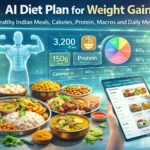
AI Diet Plan for Weight Gain: Healthy Indian Meals, Calories, Protein, Macros and Daily Meal Chart
Gaining weight in a healthy way is just as important as losing weight. Many people struggle with being underweight, low appetite, fast metabolism, or lack of proper meal structure. Some want to build muscle. Some want to improve strength and energy. Some want to recover from weight loss. And many people simply want a clear, practical plan that tells them what to eat, how much to eat, and how to gain weight without relying on junk food.
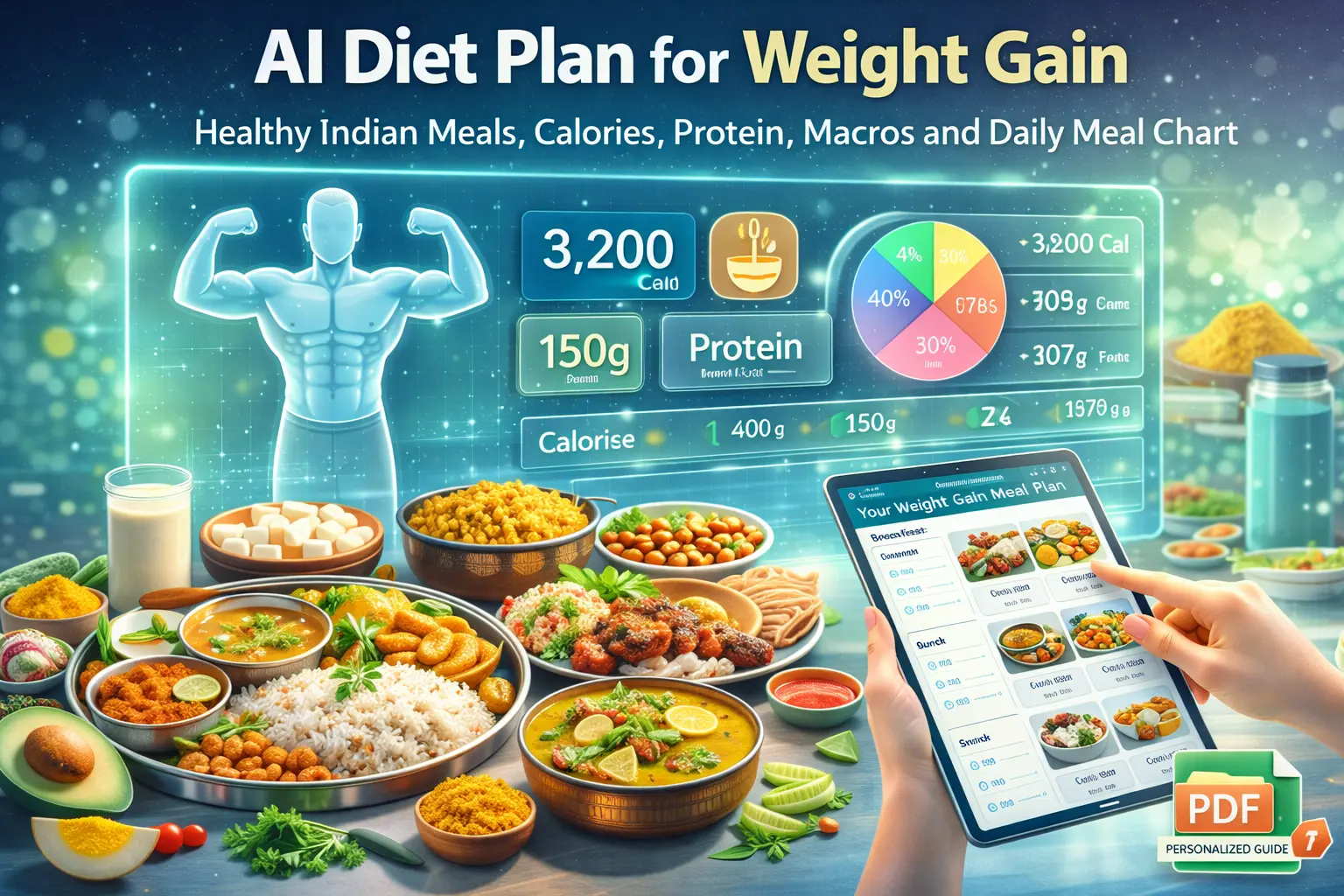
That is where an AI diet plan for weight gain becomes powerful. Instead of guessing what to eat, users can fill a form and get a personalized plan based on their body, lifestyle, food preference, and goal. This plan includes calories, protein, macros, portion sizes, meal timing, Indian meal options, and a structured daily chart.
Healthy weight gain is not about eating anything and everything. It is about creating a calorie surplus in a controlled and smart way. NHS guidance suggests adding around 300 to 500 extra calories per day to gain weight gradually and safely.

Why Healthy Weight Gain Matters
Many people think gaining weight is easy. Just eat more. But in reality, gaining healthy weight requires planning. If someone eats only junk food, they may gain fat but not strength, muscle, or proper nutrition. That can lead to low energy, poor digestion, and long-term health issues.
Healthy weight gain focuses on:
- Increasing calories gradually
- Improving protein intake
- Building muscle instead of only fat
- Maintaining balanced nutrition
- Supporting digestion and energy
Weight changes depend on calorie balance. If you eat more calories than your body uses, your body stores that energy and weight increases. ()
But how you gain weight matters more than how fast you gain it.
How an AI Diet Plan for Weight Gain Works
An AI diet plan starts with user input. The user fills a form including:
- Age
- Gender
- Height and weight
- Goal (weight gain or muscle gain)
- Activity level
- Food preference (veg/non-veg)
- Appetite level
- Daily routine
- Medical conditions if any
Based on this data, AI calculates:
- Daily calorie requirement
- Extra calories needed for weight gain
- Protein requirement
- Macro distribution
- Meal timing
- Portion sizes
Then it generates:
- Daily meal plan
- Weekly plan
- Indian meal options
- Snack ideas
- Meal prep guide
- Grocery list
- PDF version
This makes the plan practical and easy to follow.
Understanding Calories for Weight Gain
Calories are the foundation of weight gain. To gain weight, you need to eat more calories than your body burns. This is called a calorie surplus.
Experts recommend:
- Slow weight gain: 300–500 extra calories daily
- Faster gain: higher surplus if needed
This approach helps avoid excessive fat gain while supporting muscle growth. ()
Calories should come from quality food, not just sugar and processed items.
Examples of healthy calorie sources:
- Rice
- Roti
- Oats
- Nuts
- Seeds
- Milk
- Paneer
- Eggs
- Lentils
- Banana
- Peanut butter
Instead of eating huge meals, it is often better to eat smaller meals more frequently. NHS also recommends eating more often and adding snacks between meals for weight gain. ()
Role of Protein in Weight Gain
Protein is essential for muscle building and repair. Without enough protein, weight gain may lead to fat gain instead of muscle gain.
Protein helps:
- Build muscle
- Improve recovery
- Increase strength
- Support metabolism
General protein guidelines:
- Around 0.75g per kg body weight for basic needs ()
- Higher intake needed for active individuals
For example:
If a person weighs 60 kg, they may need around 45g protein minimum.
Protein-rich foods:
- Eggs
- Chicken
- Fish
- Paneer
- Milk
- Yogurt
- Lentils
- Beans
- Soy products
- Nuts
It is also important to spread protein across meals instead of eating it all at once.
Fill the form below and start your healthy journey today.
[smart_form id=”form_r9n5t7″]
Understanding Macros for Weight Gain
Macros include:
- Protein
- Carbohydrates
- Fats
Each macro plays a different role.
Carbohydrates:
- Main energy source
- Help fuel workouts and daily activity
Protein:
- Builds muscle
- Supports recovery
Fats:
- High in calories
- Help increase total calorie intake
A balanced macro plan is important because:
- Too many carbs alone may increase fat gain
- Too little protein may reduce muscle gain
- Too little fat may reduce calorie intake
AI helps balance macros automatically based on your goal.
Ideal Structure:
- Carbs: major portion for energy
- Protein: moderate to high
- Fats: controlled but sufficient
Building a Daily Meal Structure
A strong weight gain plan should not rely on random eating. It should follow a daily structure.
Example structure:
Breakfast
- High calorie + protein
- Example: oats + milk + banana + nuts
Mid-morning snack
- Light but calorie dense
- Example: smoothie or nuts
Lunch
- Balanced meal
- Rice/roti + protein + vegetables
Evening snack
- Energy-rich snack
- Example: peanut butter sandwich or poha
Dinner
- Balanced but filling
- Protein + carbs + vegetables
Before bed
- Optional
- Milk or light snack
NHS also suggests eating smaller meals more often and including snacks to increase calorie intake. ()
Indian Meal Plan for Weight Gain
Indian diets are naturally suitable for weight gain when structured properly.
Healthy Indian foods:
- Roti
- Rice
- Dal
- Paneer
- Curd
- Ghee (in moderation)
- Nuts
- Seeds
- Fruits
- Vegetables
Example Day:
Breakfast:
Oats with milk, banana, peanut butter
Snack:
Handful of almonds + dates
Lunch:
2 roti + dal + paneer sabzi + rice
Snack:
Smoothie or sandwich
Dinner:
Rice + chicken/paneer + vegetables
Bedtime:
Milk
The goal is to increase calories without making meals too heavy or difficult to digest.
Importance of Meal Frequency
If someone has low appetite, eating large meals may be difficult. In that case, smaller frequent meals work better.
Guidelines:
- 5 to 6 meals per day
- Include snacks between meals
- Do not skip meals
NHS also recommends eating more frequently and adding snacks to support weight gain. ()
This method helps increase total calorie intake without discomfort.
Best Foods for Weight Gain
High-calorie healthy foods:
- Nuts and nut butter
- Avocado
- Milk and dairy
- Paneer
- Eggs
- Rice
- Potatoes
- Whole grains
- Dry fruits
- Smoothies
Adding small calorie boosters can help:
- Extra oil in cooking
- Cheese in meals
- Seeds in salads
- Milk in tea or coffee
Adding healthy fats like olive oil or nuts can increase calories without increasing meal size too much. ()
Meal Prep for Weight Gain
Meal prep makes diet easier to follow.
Simple meal prep ideas:
- Cook rice or dal in bulk
- Keep boiled eggs ready
- Store chopped vegetables
- Prepare smoothies quickly
- Keep snacks ready
Meal prep reduces:
- Skipping meals
- Eating junk food
- Decision fatigue
Consistency is key for weight gain.
Common Mistakes in Weight Gain
Many people fail to gain weight due to mistakes like:
- Skipping meals
- Eating too little
- Relying on junk food
- Not eating enough protein
- Not tracking calories
- Poor meal timing
Another mistake is expecting fast results. Healthy weight gain takes time and consistency.
How Fast Should You Gain Weight
Healthy weight gain should be gradual. Rapid weight gain usually leads to fat gain.
A slow and steady increase is better because:
- Easier to maintain
- Better for digestion
- Supports muscle growth
Experts recommend gradual increase in calories instead of sudden overeating. ()
Muscle Gain vs Fat Gain
Not all weight gain is the same.
Muscle gain:
- Requires protein
- Requires strength training
- Leads to strength and better body composition
Fat gain:
- Happens when calories are too high
- No activity
- Poor food quality
A good AI plan focuses on lean weight gain, not just fat gain.
Importance of Strength Training
Diet alone is not enough for healthy weight gain.
Strength training helps:
- Build muscle
- Improve appetite
- Use calories efficiently
Even basic workouts can improve results significantly.
Hydration and Digestion
Hydration is often ignored but very important.
Guidelines:
- Drink enough water
- Avoid too much liquid before meals
- Support digestion with fiber
Digestive issues can reduce appetite, so meals should be easy to digest.
How AI Improves Weight Gain Plans
AI removes guesswork.
It helps:
- Calculate calories
- Balance macros
- Adjust portions
- Customize meals
- Track progress
It also adapts the plan over time based on results.
This makes it more effective than a static diet chart.
What the Final Output Should Include
A strong AI plan should include:
- Daily calories
- Protein target
- Macro breakdown
- Meal plan
- Portion sizes
- Recipes
- Grocery list
- Meal prep guide
- PDF download
This makes the plan complete and actionable.
Fill the form below and start your healthy journey today.
FAQ
How many calories should I eat to gain weight?
You need a calorie surplus. Around 300–500 extra calories daily is commonly recommended for gradual weight gain. ()
How much protein do I need?
Around 0.75g per kg body weight minimum, higher if active. ()
Can I gain weight without protein?
You can gain weight, but it may mostly be fat instead of muscle.
Is eating junk food good for weight gain?
No. It may increase fat but not improve health.
How many meals should I eat?
5–6 meals per day works best for many people.
Conclusion
An AI diet plan for weight gain is one of the smartest ways to build a healthy body. It removes confusion and gives a clear roadmap based on calories, protein, macros, and daily structure.
Instead of guessing what to eat, users get a plan built for their body and goal. Whether the goal is gaining weight, building muscle, or improving strength, a personalized plan makes the journey easier.
Healthy weight gain is not about eating more randomly. It is about eating smarter, staying consistent, and building habits that last.
With the right plan, the right structure, and the right mindset, gaining weight becomes simple, controlled, and sustainable.