Fatty liver is one of the most common lifestyle-related conditions today. It happens when excess fat builds up in the liver, often due to poor diet, lack of activity, insulin resistance, or weight gain. Many people don’t even realize they have it until a routine checkup shows abnormal liver values.
The good news is that fatty liver can often be improved or even reversed with the right diet and lifestyle changes. The most important factor is not medication—it is daily food habits. A structured diet plan helps reduce liver fat, improve metabolism, and support overall health.
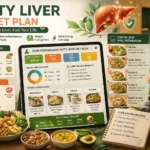
That is where an AI-based personalized fatty liver diet plan becomes powerful. Instead of following generic advice, users can fill a form and get a customized plan with calories, macros, portion size, meal timing, and step-by-step meal preparation.
Understanding Fatty Liver and Why Diet Matters
Fatty liver, also known as non-alcoholic fatty liver disease (NAFLD), is strongly linked to diet and lifestyle. Research shows that excess calorie intake, unhealthy fats, and sugar consumption contribute to fat accumulation in the liver.

Diet plays a central role because it directly affects:
- Liver fat storage
- Insulin resistance
- Body weight
- Inflammation
- Metabolism
Clinical guidance clearly shows that lifestyle changes, especially diet, are one of the most effective ways to manage fatty liver. ()
Even small improvements in diet can lead to better liver health.
How Weight Loss Improves Fatty Liver
Weight loss is one of the most effective strategies for fatty liver.
Research shows:
- 5–10% weight loss can significantly improve liver condition ()
- Gradual weight loss reduces liver fat and inflammation
Experts recommend a calorie deficit of around 500–1000 kcal per day for safe and effective weight loss. ()
This is why a calorie-controlled diet is essential.
Calories for Fatty Liver Diet
Calories are the foundation of a fatty liver diet plan.
If calorie intake is too high:
- Fat accumulates in the liver
If calorie intake is controlled:
- Liver fat reduces
A typical calorie approach:
- Moderate calorie deficit
- Around 1200–1500 kcal/day for many individuals (adjusted per person) ()
The goal is not starvation but controlled eating.
A hypocaloric diet (reduced calorie intake) improves liver enzymes, body fat, and metabolic health. ()
Macros for Fatty Liver Diet
Macros include protein, carbohydrates, and fats.
Each plays a role in liver health.
Carbohydrates
Should be moderate and mostly from whole foods
High refined carbs increase liver fat
Protein
Supports fat loss and metabolism
Fats
Healthy fats are beneficial
Saturated fats should be limited
Research suggests:
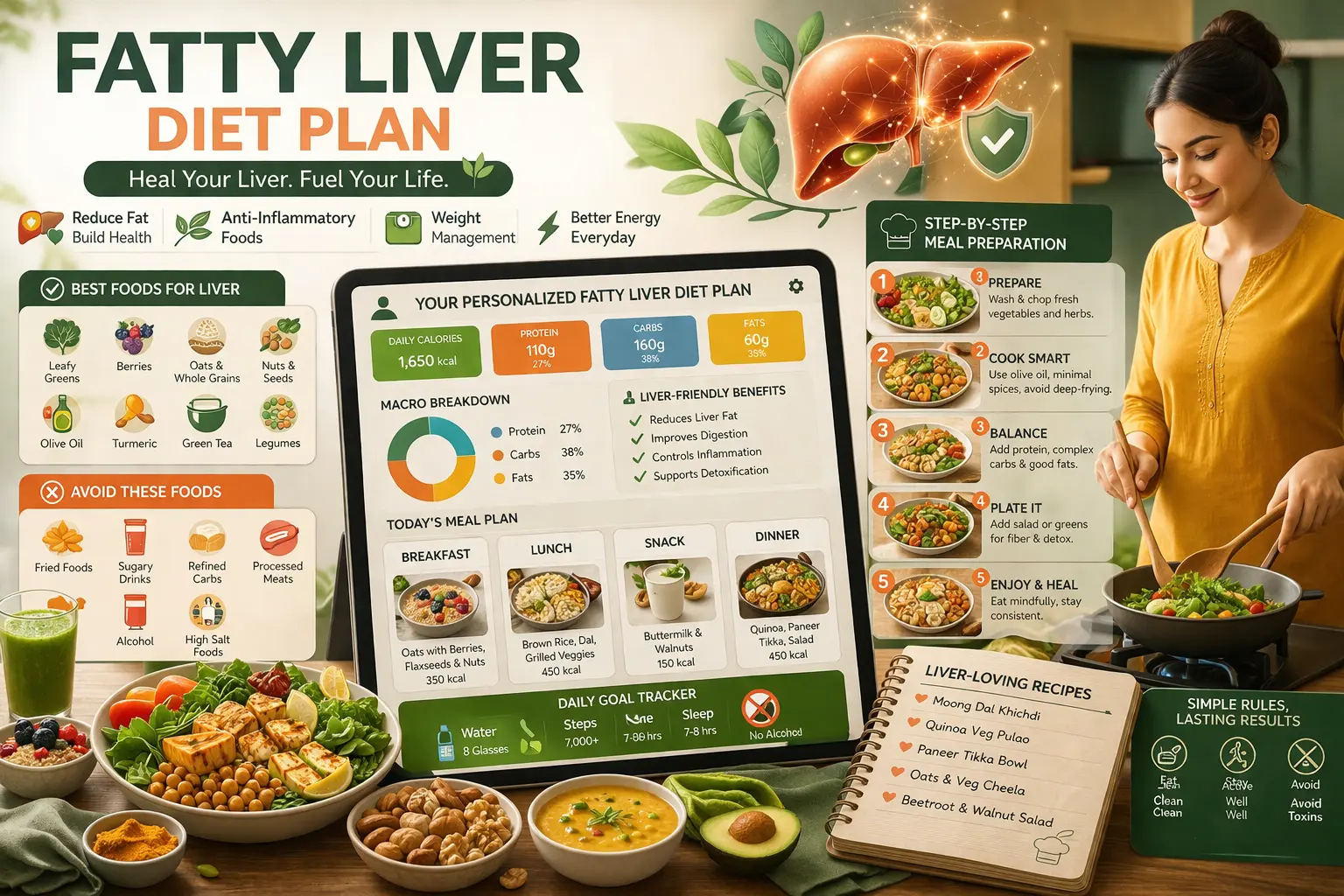
- Moderate carbs (around 40–45%)
- Healthy fats (unsaturated)
- Balanced protein intake ()
The key is balance, not elimination.
Best Foods for Fatty Liver
A good fatty liver diet should include nutrient-dense, whole foods.
Recommended foods:
Vegetables
Spinach, broccoli, carrot, cucumber
Fruits
Apple, berries, orange
Whole grains
Oats, brown rice, quinoa
Protein
Eggs, chicken, fish, paneer, tofu, dal
Healthy fats
Nuts, seeds, olive oil
Fiber-rich foods and lean proteins help reduce liver fat and improve metabolism. ()
Balanced diets with fruits, vegetables, and whole grains are strongly recommended for liver health. ()
Foods to Avoid in Fatty Liver
Certain foods increase liver fat and should be limited.
Avoid or reduce:
Sugary drinks
Soft drinks, packaged juices
Refined carbs
White bread, maida, bakery items
Fried foods
Deep fried snacks
Processed food
Packaged snacks, fast food
High saturated fat foods
Butter, fatty meat
Guidelines recommend limiting sugar, refined carbs, and saturated fats because they worsen liver fat accumulation. ()
This is one of the most important steps in recovery.
Mediterranean Diet for Fatty Liver
The Mediterranean diet is one of the most recommended dietary patterns for fatty liver.
It focuses on:
- Whole foods
- Healthy fats
- Vegetables
- Lean protein
Studies show it can reduce liver fat even without major weight loss. ()
This makes it one of the best long-term diet approaches.
Simple Daily Fatty Liver Diet Plan
Morning
Warm water + light start
Breakfast
Oats with nuts and seeds
Mid-morning
Fruit
Lunch
Roti or brown rice + dal + vegetables + salad
Evening snack
Roasted chana or nuts
Dinner
Light meal with protein and vegetables
Before sleep
Optional milk or herbal drink
This structure supports:
- Balanced calories
- Stable energy
- Better digestion
Step-by-Step Meal Preparation Guide
Meal prep makes diet easier to follow.
Step 1: Plan your meals
Decide meals for 2–3 days
Step 2: Buy ingredients
Focus on whole foods
Step 3: Prepare basics
Cook dal, rice, chop vegetables
Step 4: Store properly
Use containers for easy access
Step 5: Portion control
Divide meals into correct portions
Step 6: Cook smart
Use grilling, boiling, steaming instead of frying
Healthy cooking methods like grilling, baking, and steaming are recommended to reduce fat intake.
Meal prep reduces:
- Overeating
- Junk food consumption
- Skipping meals
Portion Control for Fatty Liver
Portion size is critical.
Simple plate method:
- Half vegetables
- Quarter protein
- Quarter carbs
Portion control helps:
- Reduce calorie intake
- Improve liver fat reduction
- Prevent overeating
Even healthy food can cause problems if eaten in excess.
Role of Sugar and Fructose
Sugar is one of the biggest causes of fatty liver.
Excess fructose:
- Converts into liver fat
- Increases insulin resistance
Guidelines recommend limiting sugar and fructose intake. ()
This means:
- Avoid sugary drinks
- Reduce sweets
- Limit processed foods
Importance of Fiber
Fiber helps:
- Improve digestion
- Control blood sugar
- Reduce fat accumulation
High-fiber diets support better metabolic health and liver function.
Fill the form below and start your healthy journey today.
[smart_form id=”form_87y6cz”]
Good sources:
- Oats
- Fruits
- Vegetables
- Whole grains
Role of Healthy Fats
Not all fats are bad.
Healthy fats:
- Reduce inflammation
- Improve metabolism
Sources:
- Olive oil
- Nuts
- Seeds
- Fatty fish
Replace saturated fats with unsaturated fats for better liver health. ()
Meal Timing and Consistency
Irregular eating worsens metabolism.
Best approach:
- 3 main meals
- 1–2 snacks
- Regular timing
Consistency helps:
- Stabilize blood sugar
- Improve digestion
- Reduce fat storage
Common Mistakes in Fatty Liver Diet
- Skipping meals
- Eating too much sugar
- Crash dieting
- Ignoring portion control
- Too much processed food
Balance is key.
Lifestyle Changes Along with Diet
Diet works best with lifestyle changes.
Important factors:
- Exercise
- Sleep
- Stress management
Even moderate physical activity improves liver health.
How Long Does It Take to Improve Fatty Liver
Fatty liver improvement takes time.
With consistent diet:
- Energy improves first
- Weight gradually reduces
- Liver markers improve
Research suggests steady weight loss over months gives best results. ()
Why This Diet Plan Works
This plan works because it is:
- Calorie controlled
- Balanced in macros
- Focused on whole foods
- Easy to follow
- Sustainable
It is not extreme, which makes it more effective long term.
Fill the form below and start your healthy journey today.
FAQ
What is the best diet for fatty liver?
A balanced diet with whole foods, fiber, lean protein, and healthy fats works best.
Can fatty liver be reversed with diet?
Yes, in many cases, diet and weight loss can significantly improve liver health. ()
How many calories should I eat?
A moderate calorie deficit is recommended, usually around 1200–1500 kcal depending on the individual. ()
What foods should I avoid?
Sugary drinks, refined carbs, fried foods, and processed foods. ()
Is exercise necessary?
Yes, it improves insulin sensitivity and supports fat loss.
Conclusion
A fatty liver diet plan is not about strict restriction. It is about smart eating, portion control, and consistency. With the right combination of calories, macros, and healthy food choices, it is possible to reduce liver fat and improve overall health.
An AI-based personalized plan makes this process even easier by creating a structured diet based on your body and lifestyle. Instead of confusion, you get clarity. Instead of random eating, you get a system.
The goal is simple: eat better, stay consistent, and allow your body to heal naturally.