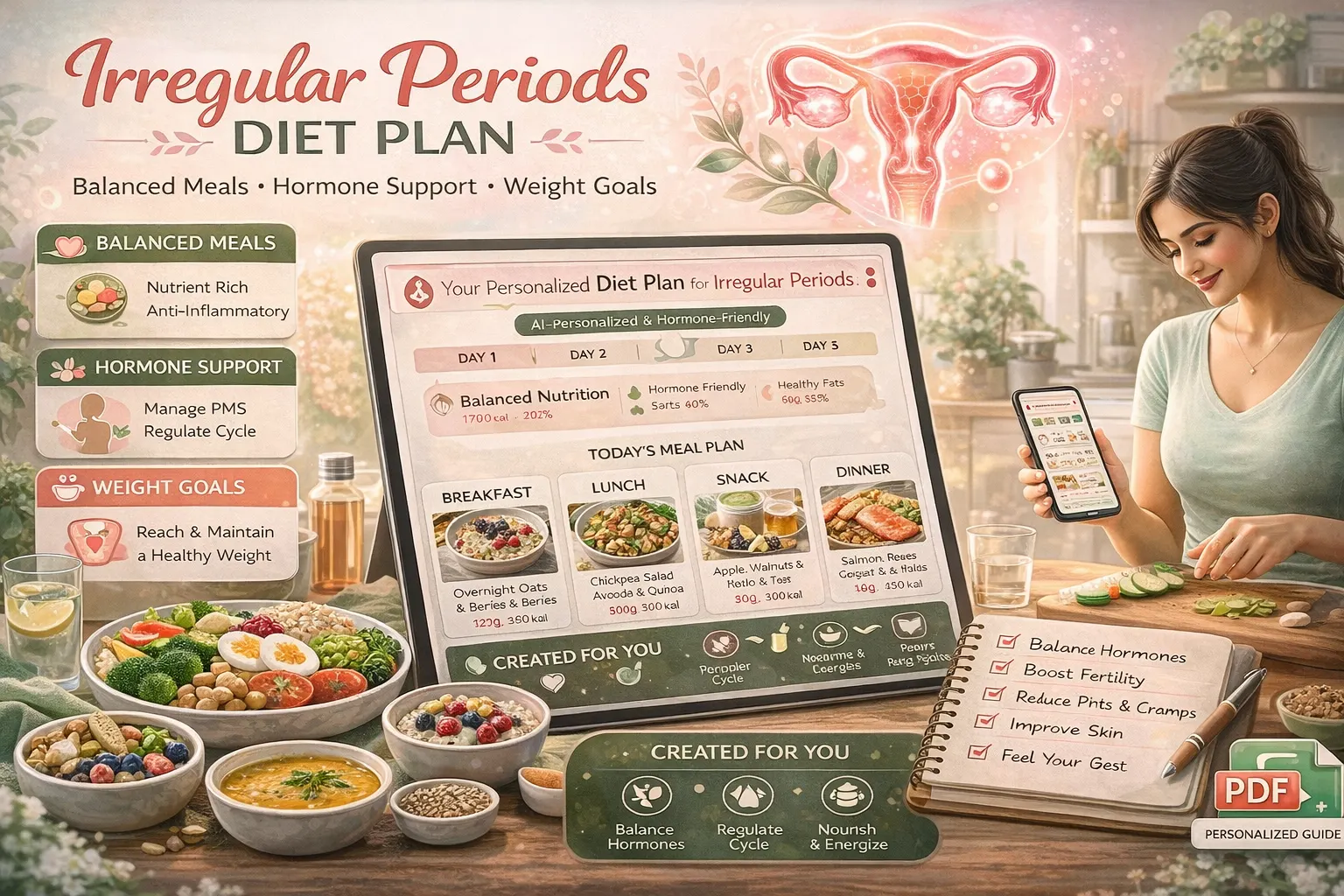
Irregular periods are one of the most common health concerns among women today. Some experience delayed cycles, some have missed periods, and others deal with unpredictable timing every month. While there can be many medical causes, one of the most overlooked factors is diet and lifestyle.
Food plays a major role in hormonal balance, metabolism, and reproductive health. When eating patterns are poor, highly processed, or inconsistent, it can disrupt hormones like estrogen, progesterone, and insulin, leading to irregular cycles. On the other hand, a balanced and structured diet can support hormone production, stabilize energy, and improve menstrual regularity.
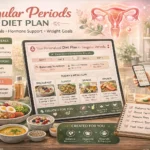
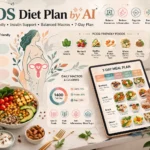
That is where an AI-powered personalized diet plan becomes extremely useful. Instead of guessing what to eat, users can fill a form and get a customized plan based on their body, symptoms, weight goals, and lifestyle. This includes calories, macros, portion sizes, meal timing, and a downloadable PDF plan.

Understanding Irregular Periods and Hormonal Balance
Irregular periods happen when the menstrual cycle does not follow a consistent pattern. A normal cycle usually ranges between 21 to 35 days, and anything outside this range may be considered irregular. ()
Hormones control the menstrual cycle. When hormones become imbalanced, cycles can become unpredictable. This imbalance may be influenced by stress, weight changes, poor diet, insulin resistance, or conditions like PCOS.
Diet matters because it directly affects:
- Hormone production
- Blood sugar levels
- Body weight
- Inflammation
- Energy levels
A diet rich in protein, healthy fats, and fiber supports proper hormone production and helps regulate menstrual cycles. ()
Why Diet Is Important for Regular Periods
A balanced diet helps maintain stable blood sugar and supports hormonal health. Whole foods like fruits, vegetables, lean proteins, and healthy fats are known to positively impact hormone regulation. ()
On the other hand, unhealthy eating patterns can lead to:
- Insulin resistance
- Increased inflammation
- Hormonal imbalance
- Weight gain or loss
Research also shows that women with menstrual issues often have lower intake of essential nutrients like protein and vitamins, which are important for hormone balance. ()
This is why improving diet is one of the most effective first steps toward regulating periods.
Why an AI-Based Diet Plan Works
Every woman’s body is different. Some struggle with weight gain, others with undernutrition, and some with hormonal conditions like PCOS. A generic diet cannot address all these differences.
AI helps personalize:
- Calorie intake based on weight goals
- Macro distribution based on metabolism
- Meal timing based on routine
- Food choices based on preferences
- Portion sizes based on body needs
This creates a realistic and sustainable plan that fits daily life.
Core Goals of an Irregular Periods Diet Plan
A proper diet plan should focus on:
Balancing hormones
Improving insulin sensitivity
Reducing inflammation
Supporting reproductive health
Stabilizing energy levels
Managing weight
A diet rich in whole foods, healthy fats, and lean proteins helps regulate hormone production and improve menstrual health. ()
Best Foods for Irregular Periods
Certain foods support hormonal balance and menstrual health.
Include:
Leafy greens
Spinach, kale, mustard greens
These provide iron, magnesium, and folate, which support blood health and hormone function. ()
Fruits
Papaya, pineapple, apples, berries
These contain enzymes and antioxidants that support menstrual health. ()
Whole grains
Oats, brown rice, millets
High in fiber, which helps regulate hormones and reduce inflammation. ()
Protein-rich foods
Eggs, chicken, paneer, tofu, dal
Protein supports hormone production and stabilizes blood sugar. ()
Healthy fats
Nuts, seeds, olive oil, fatty fish
Healthy fats are essential for hormone production and reducing inflammation. ()
Calcium-rich foods
Dairy, tofu, broccoli
Support muscle function and reduce cramps. ()
Foods to Limit
Certain foods can worsen hormonal imbalance.
Limit:
- Sugary drinks
- Refined carbs (maida, white bread)
- Processed food
- Deep fried food
- Excess caffeine and alcohol
These foods increase insulin resistance and disrupt hormone balance. ()
Calories and Weight Goals
Weight plays an important role in menstrual health.
If overweight:
- Moderate calorie deficit may help
If underweight:
- Increase calorie intake
Extreme dieting should be avoided because low-calorie intake can disrupt hormones and even stop periods. ()
Balanced nutrition is more important than strict dieting.
Macros for Hormonal Balance
Macros include protein, carbohydrates, and fats.
Protein
Supports hormone production
Carbohydrates
Should be balanced and not too low
Fats
Essential for hormone synthesis
A balanced intake of protein, fiber, and healthy fats supports hormone balance and stable energy levels. ()
Meal Timing for Regular Periods
Meal timing is very important.
Fill the form below and start your healthy journey today.
[smart_form id=”form_cxakuw”]
Best approach:
- 3 main meals
- 1–2 snacks
- Eat every 3–4 hours
Skipping meals can disrupt blood sugar and worsen hormonal imbalance.
Regular eating patterns help stabilize hormones.
Sample Daily Diet Plan
Morning
Warm water with seeds
Breakfast
Oats with nuts and fruit or eggs with vegetables
Mid-morning snack
Fruit with nuts
Lunch
Roti or rice + dal + sabzi + salad + curd
Evening snack
Roasted chana or makhana
Dinner
Light protein meal with vegetables
Before sleep
Milk or herbal drink
This structure supports hormone balance and energy levels.
7-Day Diet Plan for Irregular Periods
Day 1
Oats + dal + vegetables
Day 2
Eggs or chilla + rice + protein meal
Day 3
Smoothie + roti + dal
Day 4
Poha + balanced lunch + light dinner
Day 5
Idli + protein-rich lunch
Day 6
Oats + vegetables + protein
Day 7
Paratha (controlled) + balanced meals
Consistency matters more than perfection.
Role of Nutrients in Menstrual Health
Certain nutrients are especially important:
Iron
Replenishes blood loss
Magnesium
Reduces cramps and improves mood
Vitamin B6
Supports hormone regulation
Omega-3
Reduces inflammation
Calcium
Supports muscle function
These nutrients help maintain a healthy menstrual cycle. ()
Importance of Gut Health
Gut health affects hormones.
Probiotic foods like yogurt and fermented foods support gut balance and improve hormone regulation. ()
Lifestyle Factors That Affect Periods
Diet works best with lifestyle changes.
Important factors:
- Exercise
- Sleep
- Stress management
Stress increases cortisol, which disrupts other hormones.
Common Mistakes
- Skipping meals
- Eating too much sugar
- Following extreme diets
- Ignoring protein
- Poor sleep
Balance is key.
How Long Does It Take to See Results
With consistent diet:
- Energy improves first
- Cravings reduce
- Cycle becomes more regular over time
Diet alone may not fix all cases, but it is a strong foundation.
Why This AI Diet Plan Works
This plan works because it is:
- Personalized
- Based on real lifestyle
- Focused on hormones
- Balanced and sustainable
It removes confusion and gives a clear roadmap.
Fill the form below and start your healthy journey today.
FAQ
Can diet help regulate periods?
Yes, a balanced diet supports hormone production and menstrual health. ()
What foods help regulate periods?
Leafy greens, fruits, whole grains, protein foods, and healthy fats. ()
Should I avoid carbs?
No, extremely low-carb diets may worsen hormonal imbalance. ()
Is weight important?
Yes, both underweight and overweight conditions can affect cycles.
How important is consistency?
Very important. Regular habits give the best results.
Conclusion
An irregular periods diet plan is not about restriction. It is about balance, consistency, and proper nutrition. With the help of AI, users can follow a personalized plan that supports hormones, improves energy, and helps regulate cycles.
Instead of guessing what to eat, they get a clear roadmap with meals, calories, macros, and routine. That makes the process simple and sustainable.
The goal is not perfection. The goal is consistency. And with the right plan, achieving better menstrual health becomes possible.