Hormonal imbalance is one of the most common yet misunderstood health issues in women today. It can affect energy levels, weight, mood, sleep, skin, and even menstrual cycles. Many women experience symptoms like fatigue, weight gain, cravings, acne, irregular periods, and mood swings without realizing that hormones may be the root cause.
The biggest challenge is not just the imbalance itself, but the confusion around what to eat. Social media is full of extreme diets, detox plans, and “hormone hacks” that promise quick results. But in reality, hormones are controlled by a combination of nutrition, lifestyle, and consistency.
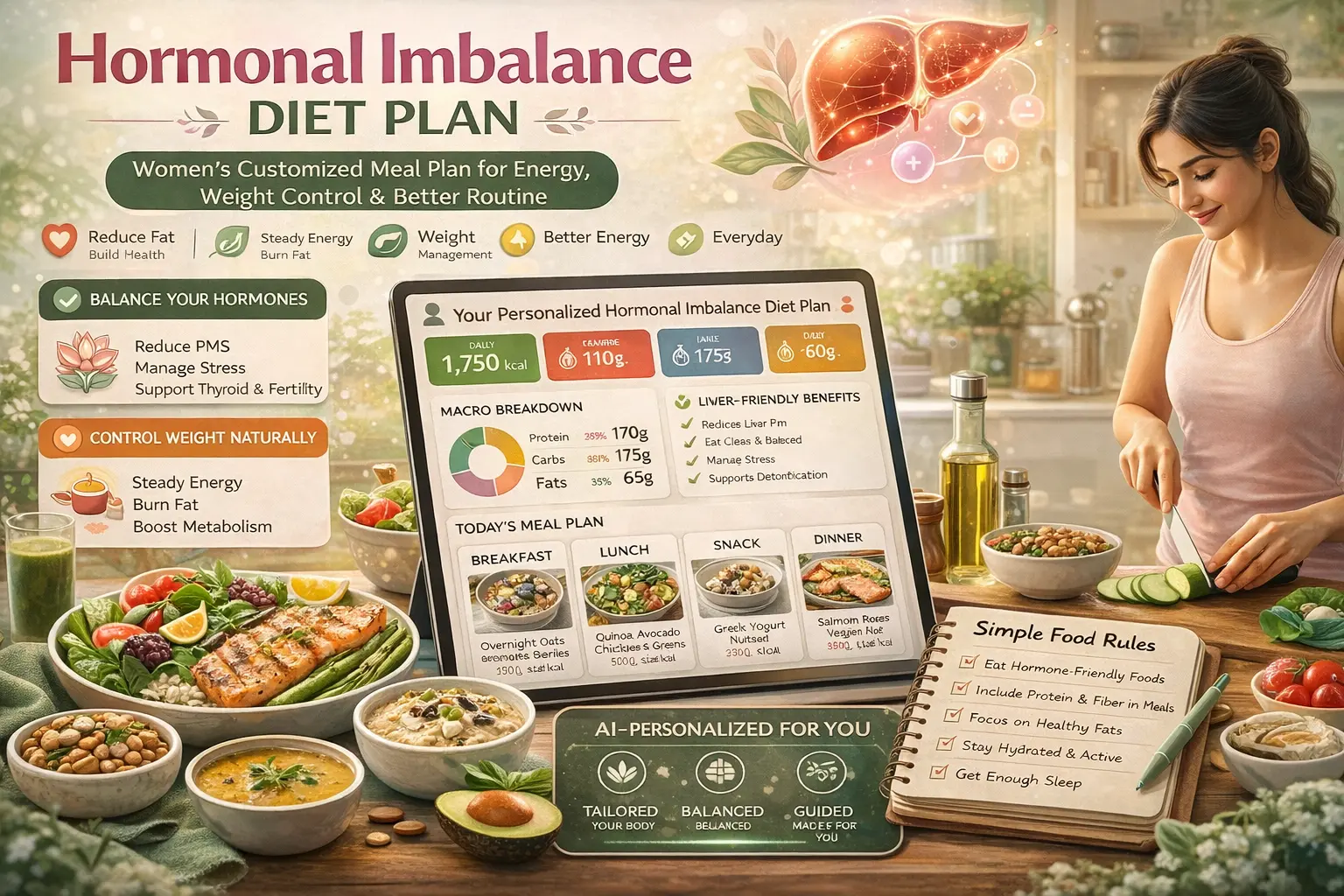
That is where an AI-based personalized hormonal imbalance diet plan becomes powerful. Instead of following random advice, users can fill a form and get a customized plan based on their body, lifestyle, symptoms, and goals. This plan includes calories, macros, meal timing, portion control, and hormone-friendly foods.
Fill the form below and start your healthy journey today.
Understanding Hormonal Imbalance in Women
Hormones are chemical messengers that control almost every function in the body, including metabolism, mood, sleep, appetite, and reproductive health. When hormones become too high or too low, the body starts showing symptoms.
Key hormones in women include:
- Estrogen and progesterone for reproductive health
- Insulin for blood sugar control
- Thyroid hormones for metabolism
- Cortisol for stress response
When these hormones go out of balance, symptoms like fatigue, weight gain, irregular periods, and mood changes can appear. ()
Hormonal imbalance does not happen suddenly. It develops over time due to factors like poor diet, stress, lack of sleep, sedentary lifestyle, and underlying conditions like PCOS or thyroid disorders.
Why Diet Plays a Major Role in Hormonal Balance
Diet directly affects hormones. Every meal influences insulin, cortisol, estrogen, and other hormones in the body. Research shows that a balanced diet rich in nutrients plays a key role in maintaining hormonal equilibrium and overall health. ()
Unhealthy eating patterns can lead to:
- Insulin resistance
- Increased inflammation
- Hormonal disruption
- Weight gain
Key dietary factors that affect hormones include:
- Excess sugar and refined carbs
- Unhealthy fats
- Nutrient deficiencies
- Poor eating patterns ()
On the other hand, a balanced diet supports:
- Stable blood sugar
- Better metabolism
- Improved mood and energy
- Hormone regulation
Why an AI-Based Hormonal Diet Plan Works
Every woman is different. Hormonal imbalance is not the same for everyone. Some women struggle with weight gain, some with fatigue, some with PCOS, and others with thyroid issues.
AI helps personalize:
- Calorie intake
- Macro distribution
- Meal timing
- Food choices
- Portion sizes
This makes the plan practical and easy to follow.
Instead of a strict diet, AI creates a flexible routine that fits into daily life.
Core Goals of a Hormonal Balance Diet
A proper hormonal diet plan should focus on:
Stabilizing blood sugar
Reducing inflammation
Supporting metabolism
Improving energy levels
Balancing estrogen and progesterone
Managing stress hormones
A balanced diet rich in fiber, protein, and healthy fats helps regulate hormones like insulin, leptin, and ghrelin. ()
Best Hormone-Friendly Foods for Women
Certain foods naturally support hormonal balance.
Include:
Leafy greens
Spinach, kale, broccoli
Healthy fats
Avocado, nuts, seeds, olive oil
Protein
Eggs, chicken, paneer, tofu, lentils
Fiber-rich foods
Whole grains, oats, fruits, vegetables
Omega-3 foods
Fish, flaxseeds, walnuts
Antioxidant-rich foods
Berries, green tea, dark chocolate
These foods help regulate hormones, reduce inflammation, and improve metabolism. ()
Fiber also supports gut health and hormone balance by improving insulin sensitivity and satiety hormones. ()
Foods to Limit for Hormonal Balance
Some foods disrupt hormones and should be reduced.
Limit:
- Sugary foods and drinks
- Refined carbs (maida, white bread)
- Processed food
- Deep fried food
- Excess caffeine
- Alcohol
High sugar intake is linked to insulin resistance and hormonal imbalance. ()
Calories and Weight Control in Hormonal Imbalance
Calories still matter, especially when weight gain is part of hormonal imbalance.
If weight loss is needed:
- Moderate calorie deficit works best
If weight is stable:
- Focus on balanced nutrition
Crash dieting should be avoided because it increases stress hormones and worsens imbalance.
Macros for Hormonal Balance
Macros include protein, carbohydrates, and fats.
Protein
Helps control hunger and supports hormone production
Carbohydrates
Should be balanced and mostly from whole foods
Fats
Essential for hormone production
Healthy fats play a major role in regulating appetite, metabolism, and hormone balance. ()
A simple macro approach:
- Protein in every meal
- Controlled carbs
- Healthy fats
Meal Timing for Hormonal Health
Meal timing affects hormones like insulin and cortisol.
Best approach:
- 3 main meals
- 1–2 snacks
- Eat every 3–4 hours
Skipping meals can:
- Increase cravings
- Disrupt hormones
- Reduce energy
Regular eating helps stabilize blood sugar and energy.
Sample Daily Hormonal Balance Meal Plan
Morning
Warm water with lemon or seeds
Breakfast
Oats with nuts and seeds or eggs with vegetables
Mid-morning
Fruit with nuts
Lunch
Roti or rice + dal + sabzi + salad + curd
Evening snack
Roasted chana or makhana
Dinner
Light protein meal with vegetables
Before sleep
Milk or herbal drink
This structure supports energy, metabolism, and hormone balance.
7-Day Hormonal Diet Plan (Simplified)
Day 1
Oats + dal + vegetables + nuts
Day 2
Eggs or chilla + rice + protein meal
Day 3
Smoothie + roti + dal
Day 4
Poha + balanced lunch + light dinner
Day 5
Idli + protein-rich lunch
Day 6
Oats + rice + vegetables
Day 7
Paratha (controlled) + balanced meals
The goal is consistency, not perfection.
Role of Gut Health in Hormones
Gut health plays a major role in hormone balance.
A healthy gut:
- Improves nutrient absorption
- Supports hormone metabolism
- Reduces inflammation
Probiotics and fiber-rich foods support gut and hormone health.
Importance of Healthy Fats
Healthy fats are essential for hormone production.
Include:
- Nuts
- Seeds
- Olive oil
- Fatty fish
Omega-3 fatty acids support hormone balance and reduce inflammation. ()
Role of Micronutrients
Certain nutrients are critical for hormonal health:
Vitamin D
Supports hormone regulation
Magnesium
Helps manage stress hormones
Zinc
Supports reproductive health
Iron
Prevents fatigue
Selenium and iodine
Support thyroid function ()
Lifestyle Factors That Affect Hormones
Diet alone is not enough.
Important factors:
- Sleep
- Stress management
- Exercise
Chronic stress increases cortisol, which disrupts other hormones.
Common Mistakes in Hormonal Diet
- Skipping meals
- Eating too much sugar
- Following extreme diets
- Ignoring protein
- Poor sleep
Balance is key.
How Long Does It Take to Balance Hormones
Hormonal balance takes time.
With consistent diet:
- Energy improves in weeks
- Cravings reduce
- Weight stabilizes
- Hormones gradually improve
Consistency is more important than quick results.
Why This AI Diet Plan Works
This plan works because it is:
- Personalized
- Balanced
- Sustainable
- Based on real lifestyle
- Focused on hormones
It removes confusion and gives a clear structure.
Fill the form below and start your healthy journey today.
FAQ
What is the best diet for hormonal imbalance?
A balanced diet with protein, fiber, healthy fats, and low sugar works best.
Can diet fix hormonal imbalance?
Diet plays a major role, but lifestyle and medical care may also be needed.
Should I avoid carbs?
No. Choose whole carbs instead of refined ones.
How important is protein?
Very important for hormone balance and appetite control.
Is weight loss necessary?
Not always, but maintaining a healthy weight helps balance hormones.
Conclusion
A hormonal imbalance diet plan is not about strict rules. It is about balance, consistency, and smart food choices. With the help of AI, it becomes easier to follow a personalized plan that supports energy, weight control, and hormone health.
Instead of guessing what to eat, users get a clear roadmap with meals, calories, macros, and routine. That removes confusion and makes the journey simple.
The goal is not perfection. The goal is consistency. And with the right plan, achieving hormonal balance becomes much more practical and sustainable.