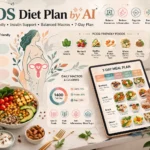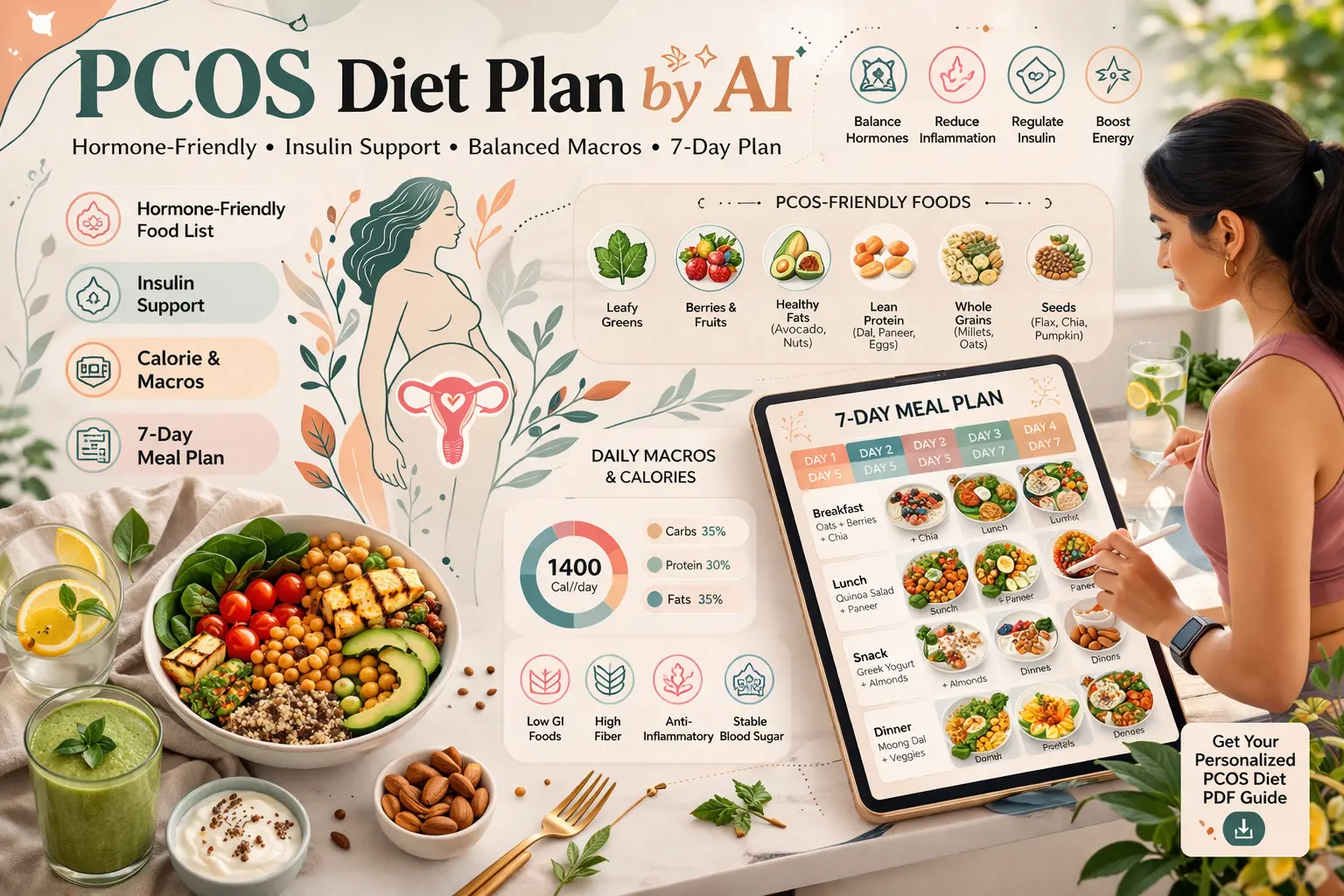
PCOS Diet Plan by AI: Hormone-Friendly Food List, Insulin Support, Calories, Macros and 7-Day Meal Plan
Polycystic Ovary Syndrome, commonly known as PCOS, is one of the most common hormonal conditions affecting women today. It impacts metabolism, hormones, insulin response, weight, periods, and overall health. Many women struggle with symptoms like irregular periods, weight gain, acne, fatigue, cravings, and mood changes.
The biggest problem is not just the condition itself, but the confusion around what to eat. Some people try extreme dieting. Some cut carbs completely. Some follow random plans that do not match their lifestyle. This leads to frustration and inconsistency.
That is why an AI-based personalized PCOS diet plan can make a real difference. Instead of guessing what works, users can fill a form and get a structured plan based on their body, symptoms, lifestyle, and goals. This plan includes calories, macros, portion sizes, hormone-friendly foods, and a complete 7-day meal plan.

Fill the form below and start your healthy journey today.
Understanding PCOS and Why Diet Matters
PCOS is closely linked to insulin resistance and hormonal imbalance. In simple terms, the body does not respond properly to insulin, which leads to higher insulin levels. This can increase androgen hormones, disrupt ovulation, and affect weight and metabolism.
Research shows that diet plays a major role in improving insulin sensitivity and hormonal balance in women with PCOS. ()
This means food is not just about calories. It directly affects:
- Blood sugar levels
- Hormone balance
- Energy levels
- Cravings
- Weight management
Another important point is inflammation. Studies show that PCOS is often associated with chronic low-grade inflammation, and diet patterns like the Mediterranean diet can help reduce this. ()
That is why the right diet is not about restriction. It is about choosing the right type of food, the right quantity, and the right timing.
Why an AI PCOS Diet Plan Works Better
Most diet plans fail because they are generic. PCOS is not the same for everyone. Some people are overweight. Some are lean. Some have severe insulin resistance. Some have mild symptoms.
AI helps by personalizing:
- Calories based on goal
- Macros based on body and lifestyle
- Meal timing based on routine
- Food choices based on preference
- Portion sizes based on metabolism
Research also supports personalized nutrition for PCOS, showing that tailored diet plans improve outcomes more effectively. ()
This makes the plan practical and easier to follow.
Core Goals of a PCOS Diet Plan
A proper PCOS diet should focus on:
Improving insulin sensitivity
Balancing hormones
Reducing inflammation
Supporting healthy weight
Stabilizing energy levels
Reducing cravings
Low glycemic index diets, balanced meals, and anti-inflammatory foods are especially helpful in PCOS management. ()
Understanding Insulin Resistance in PCOS
Insulin resistance is one of the biggest drivers of PCOS symptoms. When insulin levels stay high, the body stores more fat, especially around the abdomen, and hormones become imbalanced.
Diet plays a key role in controlling insulin. Studies show that low glycemic index foods and balanced meals can improve insulin response and reduce symptoms. ()
That is why the focus should be on:
- Slow-digesting carbs
- Fiber-rich foods
- Protein with every meal
- Healthy fats
Hormone-Friendly Food List for PCOS
The right food choices can support hormonal balance and reduce symptoms.
Best foods for PCOS include:
Vegetables
Leafy greens like spinach, kale, lettuce
Fiber-rich foods like beans, lentils, whole grains
Fruits like berries, apples, oranges
Lean protein like eggs, chicken, paneer, tofu
Healthy fats like nuts, seeds, olive oil
Low GI carbs like oats, brown rice, quinoa
These foods help slow glucose release and support insulin balance. ()
Anti-inflammatory foods like fruits, vegetables, and healthy fats also help improve hormonal health. ()
Foods to Limit in PCOS
Some foods can worsen insulin resistance and inflammation.
Limit:
- Sugary drinks
- Refined carbs (white bread, pastries)
- Processed food
- Deep fried items
- Excess sugar
- Packaged snacks
Studies show that Western diets high in fat and low in fiber can worsen PCOS symptoms. ()
Calories and PCOS
Calories still matter, but quality matters more.
For overweight individuals:
- Moderate calorie deficit may help
For lean PCOS:
- Focus on quality and balance
The goal is not extreme dieting. It is sustainable eating.
Macros for PCOS Diet
A balanced macro approach works best.
Protein
Supports hormones and reduces cravings
Carbohydrates
Should be low GI and controlled
Fats
Support hormone production and satiety
Balanced macro intake improves insulin sensitivity and overall metabolic health. ()
A simple structure:
- Protein in every meal
- Controlled carbs
- Healthy fats
Meal Timing for PCOS
Regular eating patterns are important.
Skipping meals can worsen insulin spikes and cravings.
Best approach:
- 3 main meals
- 1 to 2 snacks
- Consistent timing
Regular meal timing helps stabilize blood sugar and improve hormonal balance. ()
7-Day PCOS Diet Plan by AI
Day 1
Breakfast: Oats with seeds and yogurt
Lunch: Roti, dal, sabzi
Snack: Apple with nuts
Dinner: Paneer with vegetables
Day 2
Breakfast: Vegetable omelette or besan chilla
Lunch: Brown rice, rajma, salad
Snack: Roasted chana
Dinner: Grilled chicken or tofu with veggies
Day 3
Breakfast: Smoothie with banana, seeds, protein source
Lunch: Quinoa or roti with dal and vegetables
Snack: Fruit + nuts
Dinner: Light vegetable bowl
Day 4
Breakfast: Poha with peanuts
Lunch: Rice + dal + sabzi
Snack: Yogurt
Dinner: Paneer or tofu stir fry
Day 5
Breakfast: Idli with sambhar
Lunch: Roti + chana + salad
Snack: Nuts + fruit
Dinner: Vegetable soup + protein
Day 6
Breakfast: Oats + milk + seeds
Lunch: Brown rice + fish or paneer
Snack: Smoothie
Dinner: Light protein meal
Day 7
Breakfast: Paratha (controlled portion) + curd
Lunch: Balanced Indian meal
Snack: Fruit + nuts
Dinner: Light dinner
This plan focuses on:
- Balanced meals
- Low GI carbs
- Protein intake
- Healthy fats
- Regular timing
Research-based plans also emphasize whole foods, balanced macros, and low sugar intake for PCOS. ()
How AI Customizes This Plan
AI modifies this plan based on:
- Weight goal
- Activity level
- Insulin resistance severity
- Food preference
- Meal timing
- Lifestyle
This makes the plan more accurate and effective.
Meal Prep for PCOS
Meal prep helps consistency.
Simple tips:
- Prepare ingredients in advance
- Keep healthy snacks ready
- Cook basic meals in batches
Consistency matters more than perfection.
Lifestyle Factors Along with Diet
Diet alone is not enough.
Important factors:
- Exercise
- Sleep
- Stress management
Exercise improves insulin sensitivity and hormonal balance. ()
Common Mistakes in PCOS Diet
- Skipping meals
- Eating too much sugar
- Following extreme diets
- Ignoring protein
- Lack of consistency
Balance is key.
How Long Does It Take to See Results
PCOS improvement takes time.
With consistent diet:
- Energy improves first
- Cravings reduce
- Weight stabilizes
- Hormones gradually improve
There is no instant fix, but consistent habits work.
Why This AI Diet Plan Is Effective
Because it is:
- Personalized
- Balanced
- Sustainable
- Based on real lifestyle
- Focused on insulin and hormones
Research shows diet is one of the most effective interventions for PCOS management. ()
Fill the form below and start your healthy journey today.
FAQ
What is the best diet for PCOS?
A balanced diet with low GI foods, protein, fiber, and healthy fats works best.
Can diet improve PCOS symptoms?
Yes. Research shows diet improves insulin resistance and hormonal balance. ()
Should I avoid carbs in PCOS?
No. Choose low GI carbs instead of eliminating them.
Is weight loss necessary?
Not always. Even without weight loss, diet improves symptoms.
How important is protein?
Very important. It helps control hunger and hormones.
Conclusion
A PCOS diet plan is not about restriction. It is about balance, consistency, and personalization. With the help of AI, it becomes easier to follow a structured plan that supports hormones, insulin, and overall health.
Instead of guessing what works, users get a clear roadmap with meals, calories, macros, and timing. That removes confusion and makes the journey simpler.
The key is not perfection. The key is consistency. And with the right plan, managing PCOS becomes much more achievable.